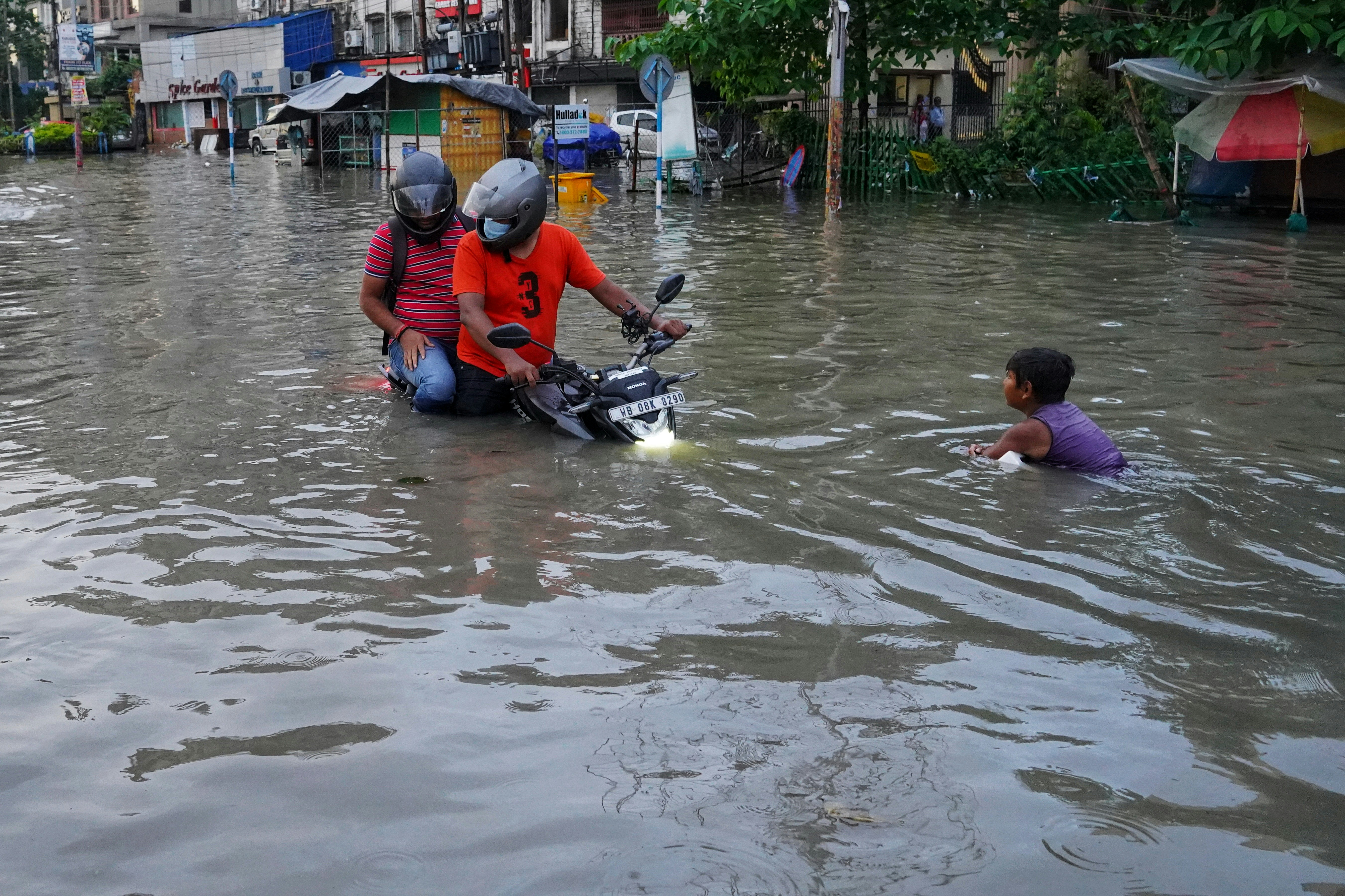
India has the highest number of disaster-induced displaced people in South Asia and is consistently one of the top countries in this regard globally (Varadarajan, 2020). According to reports, approximately 1.5 million people are recognized as internally displaced in India every year, mostly due to climate change. Comparing this figure to the 19.3 million people displaced globally due to climate change demonstrates that this subcontinent is one of the most vulnerable regions in the world (Wilson, 2021).
Due to India’s unique geoclimatic and socioeconomic conditions, the country is vulnerable to various events such as floods, droughts, cyclones, tsunamis, earthquakes, urban flooding, landslides, avalanches, and forest fires. Twenty-seven out of 36 States and Union Territories (UTs) are disaster-prone. Specifically, 58.6% of the landmass is prone to earthquakes of moderate to very high intensity; 12% is prone to floods and river erosion; and out of the 7,516 km coastline, 5,700 km is prone to cyclones and tsunamis. Additionally, 68% of the cultivable land is vulnerable to drought, hilly areas are at risk from landslides and avalanches, and 15% of the total landmass is prone to landslides. A total of 5,161 Urban Local Bodies (ULBs) are prone to urban flooding. Disaster risks in India are further compounded by increasing vulnerabilities related to changing demographic and socioeconomic conditions, unplanned urbanization, development within high-risk zones, environmental degradation, climate change, geological hazards, epidemics, and pandemics. Obviously, these factors evidence how India’s economy, its population, and its sustainable development are seriously threatened by disasters (National Disaster Management Authority, 2021).
Observations on temperature and precipitation over the last century, as well as recent observations of cyclones and sea levels, show notable climate irregularities over the Indian region. These changes will most probably increase the number of extreme weather events and worsen hazards like floods, droughts, and soil erosion. Other significant climate anomalies, such as shifts in temperature, precipitation, storms, cyclones, sea-level rise, and coastal inundation, are also projected for the region. The annual mean surface air temperature rise is expected to range between 1.7°C and 2°C, and seasons may get warmer by around 2°C toward the 2030s. It is also expected that warming in night temperatures will be more pronounced over the southern peninsula and central and northern India, while daytime warming is expected to be higher over central and northern India.
According to the report ‘Turn Down the Heat,’ published by the World Bank in 2012, more frequent droughts are expected in parts of South Asia, especially in northwestern India, Jharkhand, Orissa, and Chhattisgarh. A significant decrease in crop yields is anticipated due to extreme heat by the 2040s. Furthermore, rainfall patterns will notably change, with an increase in the frequency of high-intensity rainfall events. It is expected that the subcontinent will experience relatively larger sea-level rises than higher latitudes, which has ramifications for the coastal regions of India due to their proximity to the equator. Sea-level rise and storm surges will lead to saltwater intrusion in coastal areas, impacting agriculture, degrading groundwater quality, contaminating drinking water, and possibly causing a rise in diarrhea and cholera outbreaks, as the cholera bacterium survives longer in saline water (Government of India, 2019).
Of India's 1.3 billion people, 67% live in rural areas and depend on climate-sensitive sectors such as agriculture, fisheries, and forestry for their livelihoods. Over the last two decades, recurrent droughts and extreme weather events—including heatwaves, floods, cyclones, and rising sea levels—have devastated the agricultural sector and led to a surge in migration from climate-impacted hinterlands to urban centers (Rishu Garg, 2021).
According to data from the Internal Displacement Monitoring Centre (IDMC), from 2011 to 2021, a total of 225 disaster events were reported, including 150 floods, 41 storms, 5 earthquakes, 1 drought, 24 wet mass movements, and various other climate events. Approximately 40 million people were internally displaced due to these disasters. The highest number of displacements resulted from floods (29 million), followed by storms (10.8 million), earthquakes (166.5 thousand), droughts (63.4 thousand), and wet mass movements (6.3 thousand) (The Internal Displacement Monitoring Centre (IDMC), 2022).
The National Disaster Management Authority (NDMA), headed by the Prime Minister of India, is the highest body responsible for disaster management (National Disaster Management Authority, 2023). The NDMA and its state-level counterparts currently address disaster-induced displacement through prevention, preparedness, capacity building, and rehabilitation plans. Furthermore, the Government of India provides compensation for drought to farmers from disaster relief funds. However, various farmers’ bodies, NGOs, and academics argue that the amount of compensation is grossly insufficient (KUMAR, 2022).
To mitigate ‘distress migration’ from rural communities, the Government of India has long run safety net and adaptive social protection programs. These programs aim to create wage employment through public works in times of climate extremes, such as droughts and floods, or during periods of agricultural hardship. One such program is the Mahatma Gandhi National Rural Employment Guarantee Act (MGNREGA), which guarantees 100 days of paid work to rural households every year. it also provides 50 additional days of paid work in areas affected by climate hazards. The goal of this program is to build climate resilience and help vulnerable households cope with and recover from climatic events. However, results suggest that MGNREGA has not been entirely successful due to several reasons, including operational and administrative problems (Bharadwaj, 2021).
Research conducted across three Indian states—Rajasthan, Uttar Pradesh, and Madhya Pradesh—involving surveys of 1,046 households and 48 focus group discussions, found that while all participants were aware of MGNREGA, many felt it failed to provide an adequate safety net. Participants reported daily wages of 201 INR in Uttar Pradesh, 190 INR in Madhya Pradesh, and 220 INR in Rajasthan. The research claims that families still choose to migrate due to low wages, delayed payments, a lack of assured work, and administrative delays. Furthermore, the author notes that migrants face issues such as a lack of recognized rights and poor living conditions at their destination sites (Ritu Bharadwaj, 2021).
The International Federation of Red Cross and Red Crescent Societies (IFRC) is partnering with C40 Cities to urge urban planners and residents to prepare for more dangerous heatwaves. Five Indian cities are among the C40 network, where mayors are increasing green spaces and expanding "cool roof" programs. However, more must be done as the climate crisis worsens. Mark Watts, Executive Director of C40 Cities, states: “Cities that are used to hot weather need to prepare for even longer periods of sweltering heat, and cooler cities need to prepare for levels of extreme heat that they are not accustomed to.” The C40 network supports cities by developing heat resilience studies, encouraging heat risk management in climate action plans, and measuring the impacts of mitigation efforts like greening and emergency management (IFRC, 2022).
The Asian Development Bank (ADB) continues to support climate change mitigation and disaster resilience in India through investments in resilient infrastructure and clean energy. For example, the ADB committed $251 million to reduce flood risks in the Chennai-Kosasthalaiyar river basin, which endangers 1.9 million people. The ADB is also helping communities cope with intensifying rainfall, sea-level rise, and storm surges, while providing technical assistance to restore ecosystems along India's coastlines (Asian Development Bank, 2022).
The World Bank (WB) is also assisting the Government of India with adaptation and mitigation. On adaptation, the WB supports a pilot project in Andhra Pradesh to help drought-prone communities and is assisting two coastal cities in meeting the threat of rising sea levels. It is also helping India transform its water resource management by fostering dialogue and building institutions capable of meeting basin-wide needs efficiently. On mitigation, the WB has initiated work on a low-carbon growth strategy and supports initiatives to maximize renewable energy access and energy efficiency (The World Bank, 2009).
In conclusion, several issues regarding climate-induced migration in India remain: India is one of the few countries that is not a signatory to the 1951 UN Refugee Convention or its 1967 Protocol. While India has adopted the National Action Plan for Climate Change (NAPCC), it does not currently officially capture data on climate-induced internal migrants (Arul, 2022).
While reviewing documents from UN agencies, the Indian government, and NGOs, it was surprising to find no specific information regarding the response of organizations like the IOM or UNHCR to climate-induced displacement in India. Most available reports were general to South Asia and lacked specific data on India. Furthermore, there is a lack of information on the Government of India’s specific plans for the return of climate-induced displaced people to their homes; most official websites focus primarily on broader climate change management rather than migration specifically.
References
Arul, S. (2022, June 3). India needs to recognise the rights of climate refugees. IDR. https://idronline.org/article/climate-emergency/india-needs-to-recognise-the-rights-of-climate-refugees/
Asian Development Bank. (2022). Annual report 2021: Toward a green and inclusive recovery. https://www.adb.org/documents/adb-annual-report-2021
Bharadwaj, R. H. (2021, October). Connecting the dots: Climate change, migration and social protection. International Institute for Environment and Development (IIED).
Government of India. (2019). National disaster management plan. National Disaster Management Authority.
IFRC. (2022, June 14). IFRC and C40 Cities urge cities to prepare for more dangerous and deadly heat waves. https://www.ifrc.org/press-release/ifrc-and-c40-cities-urge-cities-prepare-more-dangerous-and-deadly-heat-waves
Kumar, A. (2022, March 7). Towards a people-centred national policy for migration induced by climate change. The Print. https://theprint.in/theprint-valuead-initiative/towards-a-people-centred-national-policy-for-migration-induced-by-climate-change/862202/
National Disaster Management Authority. (2021). Annual report 2020-2021. Government of India.
National Disaster Management Authority. (2023). National Disaster Management Authority Government of India. https://ndma.gov.in/
Rishu Garg, D. Z. (2021). Climate-induced displacement and migration in India. Climate Action Network – South Asia (CANSA).
Ritu Bharadwaj, S. H. (2021, October). Connecting the dots: Climate change, migration and social protection. International Institute for Environment and Development (IIED). http://pubs.iied.org/20591IIED
The Internal Displacement Monitoring Centre. (2022). Global internal displacement database. https://www.internal-displacement.org/database/displacement-data
The World Bank. (2009). Climate change. http://web.worldbank.org/archive/website01291/WEB/0__CO-78.HTM
Varadarajan, R. (2020, December 19). Climate migration in India. Project Statecraft. https://www.projectstatecraft.org/post/climate-migration-in-india
Wilson, S. (2021, March 18). Recognition of climate refugees: What should be India’s stand? Refugee Law Initiative. https://rli.blogs.sas.ac.uk/2021/03/18/recognition-of-climate-refugees-what-should-be-indias-stand/